Injection molding represents the dominant manufacturing process for high-volume plastic parts, producing everything from consumer electronics housings to automotive components. Successful injection molding sourcing requires understanding tooling investments, material science, process capabilities, and quality control methods that distinguish world-class molders from mediocre suppliers.
Understanding Injection Molding Fundamentals
The injection molding process transforms plastic pellets into finished parts through heating, injection, and cooling cycles. Molten plastic injects into precision molds under high pressure, fills the cavity, and solidifies into the desired shape. Cycle times range from seconds for small parts to minutes for large, thick-walled components. Understanding these fundamentals helps buyers set realistic expectations for capabilities, costs, and lead times.
Mold construction determines part quality, production efficiency, and tooling longevity. Steel molds withstand millions of cycles for high-volume production but require substantial upfront investment. Aluminum molds cost less and machine faster but wear more quickly, making them suitable for low to medium production volumes. Prototype molds using softer materials enable rapid iteration during development but cannot support production volumes.
Press tonnage requirements scale with part size and projected area. Insufficient clamping force allows mold separation during injection, creating flash defects. Excessive tonnage increases energy costs without improving part quality. Matching part requirements to available press capacity ensures efficient production and optimal quality.
Tooling Considerations and Costs
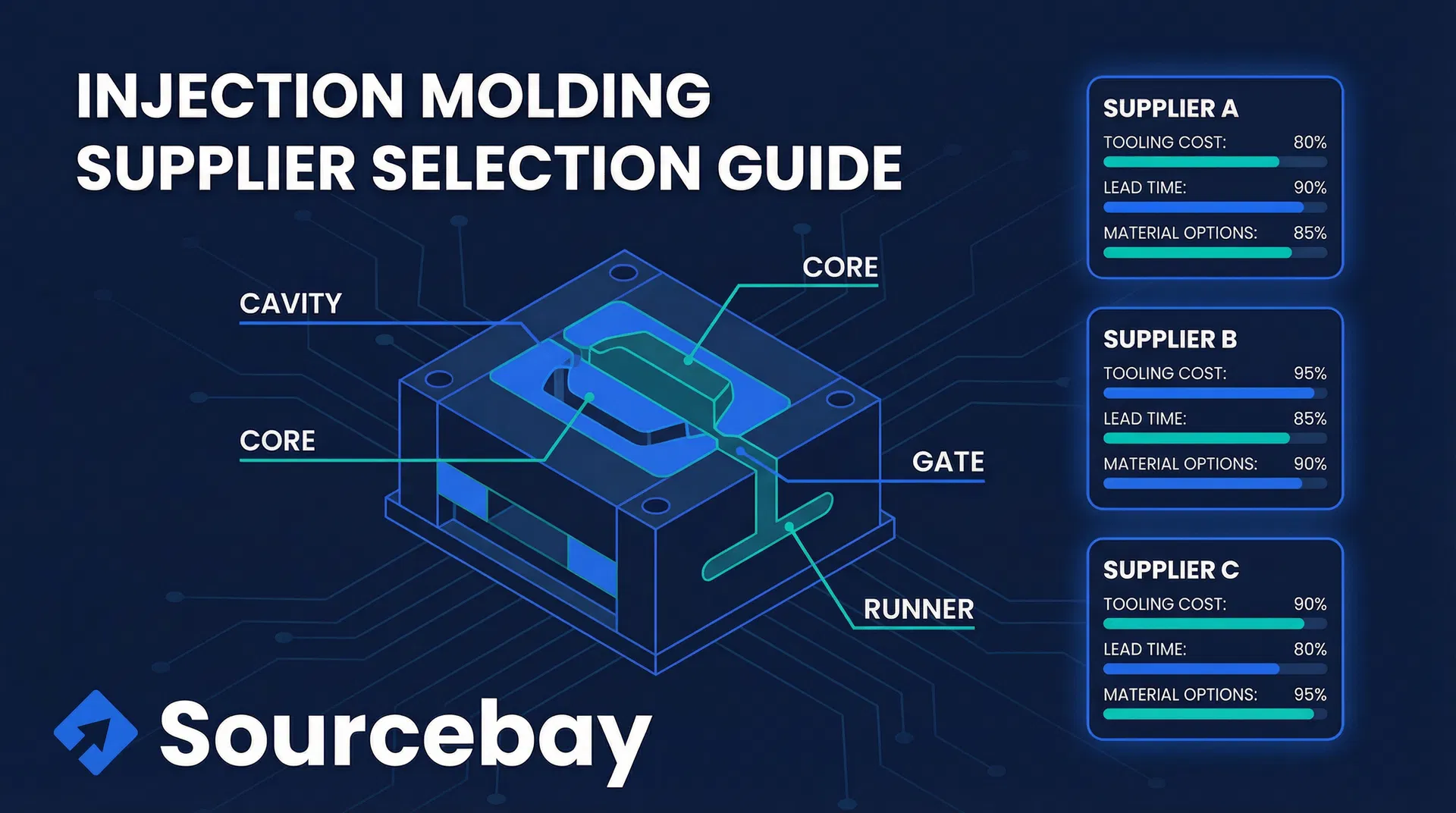
Mold design profoundly impacts part quality, production efficiency, and total program costs. Single-cavity molds produce one part per cycle, offering design flexibility and lower initial investment. Multi-cavity molds produce multiple identical parts simultaneously, reducing per-part costs for high-volume production. Family molds produce different parts in a single shot, optimizing efficiency for assemblies requiring multiple components.
Tooling costs vary dramatically based on complexity, cavity count, and quality level. Simple single-cavity prototype molds may cost $3,000 to $10,000. Production molds for complex parts with multiple cavities can exceed $100,000. Understanding these cost drivers enables realistic budgeting and informed decisions about design complexity versus tooling investment.
Mold maintenance and repair costs affect total cost of ownership. High-quality molds with proper maintenance produce millions of parts before requiring significant refurbishment. Inferior molds may need frequent repairs, causing production downtime and quality issues. Discussing maintenance plans and expected mold life during supplier selection prevents unpleasant surprises.
Material Selection and Properties
Thermoplastic material selection balances performance requirements, cost, and processability. Commodity resins like polypropylene (PP) and polyethylene (PE) offer low cost and good chemical resistance for packaging and consumer products. Engineering plastics like ABS, polycarbonate (PC), and nylon provide superior mechanical properties for demanding applications. High-performance polymers like PEEK and PPS serve extreme temperature or chemical exposure environments.
Material properties vary significantly within polymer families. Impact-modified grades improve toughness at the expense of stiffness. Glass-filled variants increase strength and dimensional stability but may create surface finish challenges. UV-stabilized formulations resist outdoor degradation. Understanding these property trade-offs ensures optimal material selection for specific applications.
Regulatory compliance requirements constrain material choices for certain applications. Medical device components require USP Class VI or ISO 10993 biocompatible materials. Food contact applications demand FDA-compliant resins. Flame retardant grades meeting UL94 standards serve electronics housings. Communicating regulatory requirements during RFQ processes ensures suppliers quote appropriate materials.
Design for Injection Molding
Wall thickness uniformity prevents defects and optimizes cycle times. Thick sections cool slowly, increasing cycle time and creating sink marks or voids. Thin walls may not fill completely, causing short shots. Maintaining consistent wall thickness throughout the part, typically 1.5 to 3mm for most applications, promotes uniform cooling and high-quality parts.
Draft angles facilitate part ejection from molds. Vertical walls without draft create friction during ejection, potentially damaging parts or molds. Minimum draft angles typically range from 0.5 to 2 degrees depending on texture and part depth. Generous draft angles ease ejection and extend mold life.
Rib and boss design requires careful attention to avoid sink marks and warpage. Ribs should be 50-60% of nominal wall thickness to prevent differential cooling. Boss wall thickness should similarly avoid excessive material accumulation. Proper rib and boss design maintains structural performance while preventing cosmetic and dimensional defects.
Gate location and type affect part appearance and properties. Edge gates hide gate vestiges on part perimeters. Submarine gates automatically separate during ejection, eliminating degating operations. Hot runner systems eliminate runners entirely, reducing material waste and cycle time. Gate selection balances cosmetic requirements, material efficiency, and tooling costs.
Quality Control and Validation
First article inspection validates mold performance before full production. Comprehensive dimensional inspection, material verification, and functional testing ensure parts meet specifications. Identifying and correcting issues during first article inspection prevents costly production of defective parts.
Statistical process control (SPC) monitors production consistency. Tracking key dimensions, weights, and visual characteristics over time identifies process drift before defects occur. Suppliers employing SPC demonstrate commitment to consistent quality and proactive problem prevention.
Process validation establishes robust molding parameters. Design of experiments (DOE) methodology systematically evaluates temperature, pressure, and timing variables to identify optimal settings. Validated processes produce consistent parts across different operators, shifts, and environmental conditions.
Supplier Capability Assessment
Molding capacity and equipment capabilities determine what parts a supplier can produce efficiently. Press tonnage range, shot size capacity, and mold size accommodation constrain part geometry and size. Cleanroom facilities enable medical device or electronics production. Understanding supplier capabilities prevents mismatches between project requirements and supplier infrastructure.
Secondary operations capabilities add value beyond basic molding. In-mold decorating, insert molding, and overmolding create complex parts in single operations. Assembly, pad printing, and ultrasonic welding services enable delivery of finished assemblies rather than individual components. Consolidated operations reduce logistics complexity and total program costs.
Quality certifications indicate supplier commitment and capabilities. ISO 9001 certification demonstrates quality management system implementation. ISO 13485 certification qualifies suppliers for medical device production. IATF 16949 certification serves automotive applications. Industry-specific certifications reduce audit burden and provide confidence in supplier capabilities.
Cost Optimization Strategies
Part consolidation reduces assembly costs and improves reliability. Combining multiple components into single molded parts eliminates fasteners, reduces assembly labor, and minimizes tolerance stack-up. However, consolidation may increase tooling complexity and costs. Analyzing total program costs rather than individual part costs identifies optimal consolidation opportunities.
Material selection significantly impacts per-part costs. Commodity resins cost substantially less than engineering plastics. Regrind incorporation reduces material costs but requires careful quality control to maintain properties. Balancing material costs against performance requirements optimizes value.
Production volume optimization balances tooling investment against per-part costs. High-cavity molds reduce per-part costs for large volumes but require substantial upfront investment. Single-cavity molds minimize tooling costs for low volumes. Break-even analysis identifies optimal cavity count based on projected volumes.
Cycle time reduction directly improves productivity and reduces costs. Optimized cooling channel design, appropriate wall thickness, and efficient material selection minimize cycle time. However, excessively aggressive cycle time targets may compromise quality. Balancing cycle time against quality and mold longevity optimizes total costs.
Global Sourcing Considerations
Offshore molding offers significant cost advantages for appropriate applications. Lower labor costs in Asia reduce per-part costs substantially, particularly for labor-intensive secondary operations. However, longer lead times, communication challenges, and quality oversight complexity require careful management.
Intellectual property protection becomes critical when sourcing internationally. Comprehensive confidentiality agreements, mold ownership clauses, and understanding local IP enforcement mechanisms help safeguard proprietary designs. Some companies maintain domestic tooling for sensitive products while leveraging offshore production for standard components.
Logistics and inventory management complexity increases with international sourcing. Longer transit times require higher safety stock levels. Customs clearance and import duties add costs and potential delays. Total landed cost analysis including all logistics expenses enables accurate domestic versus offshore comparisons.
Building Molding Partnerships
Long-term relationships with injection molding suppliers generate substantial value. Suppliers familiar with customer requirements, quality standards, and communication preferences provide better service and often better pricing. Consistent volume and professional interactions motivate suppliers to prioritize customers during capacity constraints.
Early supplier involvement in product development leverages molding expertise. Experienced molders identify design improvements that reduce tooling costs, improve quality, and accelerate time to market. Collaborative design reviews often yield superior results compared to designs created in isolation.
Performance measurement and feedback support continuous improvement. Tracking quality metrics, delivery performance, and responsiveness provides objective supplier evaluation data. Sharing performance information and improvement suggestions helps suppliers align operations with customer expectations.
About the Author: The SourceBay team specializes in plastic injection molding sourcing, helping companies navigate tooling decisions, material selection, and supplier qualification to deliver high-quality molded parts at competitive costs.
Manufacturing Procurement Specialists
The Sourcebay Editorial Team comprises seasoned professionals with 15+ years of combined experience in B2B manufacturing procurement, supply chain management, and industrial sourcing across automotive, aerospace, electronics, and precision engineering sectors. Our team has helped hundreds of procurement managers streamline RFQ workflows, qualify suppliers, and reduce sourcing cycle times. We write to share practical, field-tested insights for engineering and procurement professionals.