Sheet metal fabrication encompasses a diverse range of manufacturing processes that transform flat metal sheets into functional components and assemblies. From electronics enclosures to HVAC ductwork, sheet metal parts appear across virtually every industry. Sourcing qualified fabrication partners requires understanding various processes, material considerations, and quality requirements that distinguish exceptional suppliers from mediocre ones.
Core Sheet Metal Processes
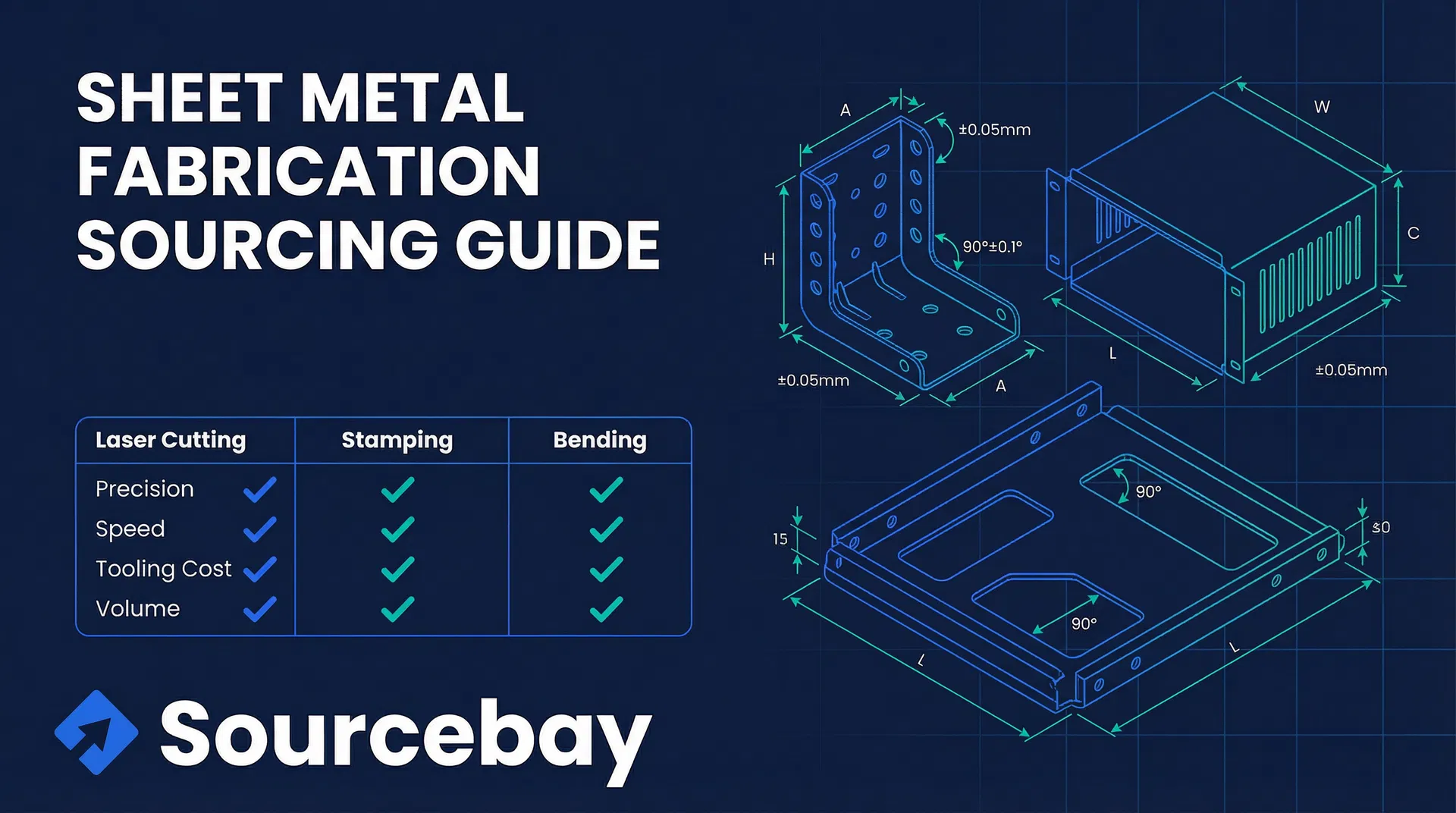
Laser cutting has revolutionized sheet metal fabrication with precision, speed, and versatility. Modern fiber laser systems cut complex geometries in materials ranging from thin gauge aluminum to thick steel plate. Cutting tolerances typically range from ±0.005 to ±0.010 inches depending on material thickness and machine capabilities. Understanding supplier laser power, bed size, and material thickness capabilities ensures compatibility with project requirements.
Punching and turret press operations excel at high-volume production of parts with repetitive features like holes, slots, and simple cutouts. While less flexible than laser cutting for complex geometries, punching offers superior speed and cost-effectiveness for appropriate applications. Tooling investments for punching operations favor higher production volumes where setup costs amortize across many parts.
Bending and forming transform flat blanks into three-dimensional components. Press brake operations create precise bends with controlled angles and radii. Factors affecting bend quality include material type, thickness, grain direction, and tooling selection. Experienced fabricators account for springback characteristics and adjust bend angles accordingly to achieve specified final dimensions.
Welding joins multiple sheet metal components into assemblies. Common welding processes include MIG (Metal Inert Gas), TIG (Tungsten Inert Gas), and spot welding. Process selection depends on material type, thickness, joint design, and cosmetic requirements. TIG welding produces superior aesthetic results for visible welds, while MIG welding offers higher productivity for structural applications where appearance matters less.
Material Selection Considerations
Steel grades offer diverse property combinations for different applications. Cold-rolled steel provides excellent formability and surface finish for painted or powder-coated parts. Hot-rolled steel costs less but exhibits rougher surface texture. Galvanized steel resists corrosion through zinc coating, making it ideal for outdoor applications or humid environments.
Stainless steel grades balance corrosion resistance, strength, and cost. Type 304 stainless steel serves general-purpose applications with good corrosion resistance and formability. Type 316 stainless steel provides superior corrosion resistance for marine or chemical environments. Type 430 stainless steel offers magnetic properties and lower cost but reduced corrosion resistance compared to 300-series grades.
Aluminum alloys combine light weight with good corrosion resistance and thermal conductivity. 5052 aluminum provides excellent formability for complex bends and deep draws. 6061 aluminum offers higher strength for structural applications. 1100 aluminum delivers maximum formability for severe forming operations. Understanding alloy characteristics ensures optimal material selection for specific applications.
Specialty materials address unique requirements. Copper and brass provide excellent electrical conductivity for electronic enclosures and bus bars. Titanium offers exceptional strength-to-weight ratio and corrosion resistance for aerospace and medical applications. These materials command premium pricing and require specialized fabrication expertise.
Quality Considerations and Tolerances
Dimensional accuracy requirements vary based on application criticality and assembly constraints. Standard sheet metal tolerances typically range from ±0.030 inches for non-critical dimensions to ±0.005 inches for precision features. Tighter tolerances increase manufacturing costs through additional operations, inspection, and potential scrap. Specifying appropriate tolerances based on functional requirements optimizes cost without compromising quality.
Surface finish affects both aesthetics and functionality. As-fabricated finish suffices for internal components or parts receiving subsequent coating. Deburring removes sharp edges for safety and assembly ease. Grinding or polishing creates smooth surfaces for cosmetic applications or parts requiring specific surface roughness for sealing or friction characteristics.
Flatness and warpage control proves challenging for large, thin panels. Welding heat input and material stress relief can cause distortion requiring secondary straightening operations. Experienced fabricators employ techniques like fixture welding, sequence control, and stress-relieving to minimize distortion. Discussing flatness requirements during quoting ensures suppliers account for necessary process controls.
Finishing and Coating Options
Powder coating provides durable, attractive finishes in virtually unlimited colors. Electrostatic application followed by oven curing creates tough, chip-resistant surfaces suitable for indoor and outdoor applications. Powder coating thickness typically ranges from 2 to 4 mils, providing excellent coverage and corrosion protection. Color matching capabilities enable brand consistency across product lines.
Wet paint finishing offers smoother appearance than powder coating for high-end aesthetic applications. Multiple coat systems with primer, color, and clear coat layers provide superior gloss and color depth. However, wet paint generally costs more than powder coating and requires longer curing times. Environmental regulations increasingly favor powder coating due to lower VOC emissions.
Plating processes deposit thin metal layers for corrosion protection or decorative purposes. Zinc plating (galvanizing) provides economical corrosion resistance for steel parts. Chromate conversion coating enhances corrosion resistance on aluminum. Electroless nickel plating offers uniform coverage on complex geometries. Understanding plating thickness requirements and specifications ensures appropriate process selection.
Anodizing aluminum parts creates decorative, wear-resistant oxide layers. Type II anodizing produces thin coatings in various colors for aesthetic applications. Type III (hard anodizing) creates thicker, harder coatings for wear resistance. Clear anodizing maintains natural aluminum appearance while improving corrosion resistance. Anodizing costs more than painting but provides superior durability for high-wear applications.
Supplier Capability Assessment
Equipment capabilities determine what parts a fabricator can produce efficiently. Laser cutting bed size limits maximum part dimensions. Press brake tonnage and bed length constrain bending capabilities. Welding certifications indicate qualified processes and operator skills. Reviewing supplier equipment lists and capacity information prevents mismatches between project requirements and supplier capabilities.
Quality management systems provide confidence in consistent production quality. ISO 9001 certification demonstrates commitment to documented procedures and continuous improvement. Industry-specific certifications like AS9100 for aerospace or ISO 13485 for medical devices indicate specialized expertise and compliance capabilities. Reviewing quality manual excerpts and inspection procedures reveals supplier quality culture.
Engineering support capabilities add value beyond basic fabrication services. Design for manufacturability (DFM) reviews identify cost reduction opportunities and potential manufacturing challenges before production begins. 3D modeling and prototyping services accelerate development cycles. Experienced fabricators often suggest design modifications that reduce costs while maintaining or improving functionality.
Cost Optimization Strategies
Design simplification reduces fabrication complexity and cost. Minimizing bend count, eliminating tight tolerances on non-critical features, and standardizing hole sizes reduces manufacturing time and tooling requirements. Collaborative design reviews with fabrication suppliers often identify simplification opportunities that designers may overlook.
Material utilization optimization reduces waste and material costs. Nesting software arranges parts on sheets to maximize material usage. However, extremely tight nesting may increase labor costs through difficult part removal and sorting. Balancing material efficiency with labor productivity optimizes total costs.
Volume consolidation leverages economies of scale. Combining multiple low-volume parts into single production runs amortizes setup costs across larger quantities. However, this strategy requires careful inventory management to avoid excess stock of slow-moving items. Analyzing demand patterns and carrying costs identifies optimal consolidation opportunities.
Finish selection significantly impacts total part cost. Powder coating costs less than wet paint or plating for most applications. Limiting color variety reduces setup time and material waste. Accepting standard colors rather than custom matches further reduces costs. Evaluating finish requirements based on actual performance needs rather than preferences optimizes value.
Lead Time Management
Quoted lead times reflect both manufacturing duration and queue time. During periods of high demand, queue time may exceed actual fabrication time significantly. Establishing relationships with multiple qualified suppliers provides flexibility to balance lead times against pricing and capacity availability.
Expedite options exist for urgent requirements but command premium pricing. Suppliers may offer rush service by prioritizing jobs, adding overtime shifts, or outsourcing operations. Understanding expedite costs and capabilities before emergencies arise enables informed decision-making under pressure.
Blanket purchase orders with scheduled releases balance inventory costs with lead time reduction. Committing to annual volumes with periodic releases enables suppliers to plan capacity and material procurement. This approach often yields better pricing while ensuring shorter lead times for individual releases.
Building Fabrication Partnerships
Long-term relationships with sheet metal fabricators generate mutual benefits. Suppliers who understand customer requirements, quality expectations, and communication preferences provide better service and often better pricing. Consistent volume and fair treatment motivate suppliers to prioritize customers during capacity constraints.
Performance feedback drives continuous improvement. Sharing quality metrics, delivery performance data, and improvement suggestions helps suppliers align operations with customer expectations. Constructive feedback delivered professionally strengthens relationships rather than damaging them.
Collaborative innovation leverages supplier expertise. Experienced fabricators possess deep knowledge of materials, processes, and design optimization. Involving fabrication partners early in product development often yields designs that are easier to manufacture, less expensive, and higher quality than designs created in isolation.
About the Author: The SourceBay team brings extensive experience in sheet metal fabrication sourcing, working with manufacturers across industries to optimize designs, select qualified suppliers, and deliver high-quality components on time and within budget.
Manufacturing Procurement Specialists
The Sourcebay Editorial Team comprises seasoned professionals with 15+ years of combined experience in B2B manufacturing procurement, supply chain management, and industrial sourcing across automotive, aerospace, electronics, and precision engineering sectors. Our team has helped hundreds of procurement managers streamline RFQ workflows, qualify suppliers, and reduce sourcing cycle times. We write to share practical, field-tested insights for engineering and procurement professionals.