Quality management represents the foundation of successful manufacturing sourcing relationships. Defective components disrupt production schedules, increase costs through rework and scrap, and damage customer relationships. Proactive quality management prevents these issues through rigorous supplier qualification, robust inspection processes, and continuous improvement methodologies that build excellence into every stage of the supply chain.
Supplier Quality Assessment and Qualification
Comprehensive supplier audits reveal quality capabilities and culture before awarding business. On-site assessments evaluate manufacturing processes, quality systems, equipment maintenance, and organizational commitment to quality. Observing actual production conditions provides insights that questionnaires and certifications cannot convey. Key audit focus areas include process control, calibration systems, corrective action processes, and employee training programs.
Quality management system certifications provide baseline confidence in supplier capabilities. ISO 9001 certification demonstrates implementation of documented quality procedures, management review processes, and continuous improvement practices. Industry-specific certifications like AS9100 for aerospace, IATF 16949 for automotive, or ISO 13485 for medical devices indicate specialized expertise and compliance with sector-specific requirements.
Process capability studies quantify supplier ability to meet specifications consistently. Capability indices like Cpk measure process variation relative to specification limits. Cpk values above 1.33 indicate capable processes with low defect risk. Values below 1.0 signal processes likely to produce defects requiring enhanced controls or specification adjustments. Requesting capability data for critical characteristics during supplier qualification prevents future quality issues.
Incoming Inspection Strategies
Risk-based inspection planning allocates resources proportional to quality risk. Critical characteristics affecting safety or functionality warrant 100% inspection or stringent sampling. Non-critical features may require minimal inspection based on supplier performance history. This approach optimizes inspection resources while maintaining appropriate quality assurance.
Statistical sampling methods enable efficient quality verification for large lot sizes. Acceptance sampling plans based on standards like ANSI/ASQ Z1.4 define sample sizes and acceptance criteria based on lot size and acceptable quality levels. Properly designed sampling plans provide statistical confidence in lot quality while minimizing inspection costs.
Automated inspection technologies improve speed, consistency, and capability compared to manual methods. Vision systems rapidly inspect dimensional features, surface defects, and assembly completeness. Coordinate measuring machines (CMM) verify complex geometries with micron-level accuracy. Automated optical inspection (AOI) detects solder defects on circuit boards. Investing in inspection automation pays dividends through reduced labor costs and improved defect detection.
Supplier Performance Monitoring
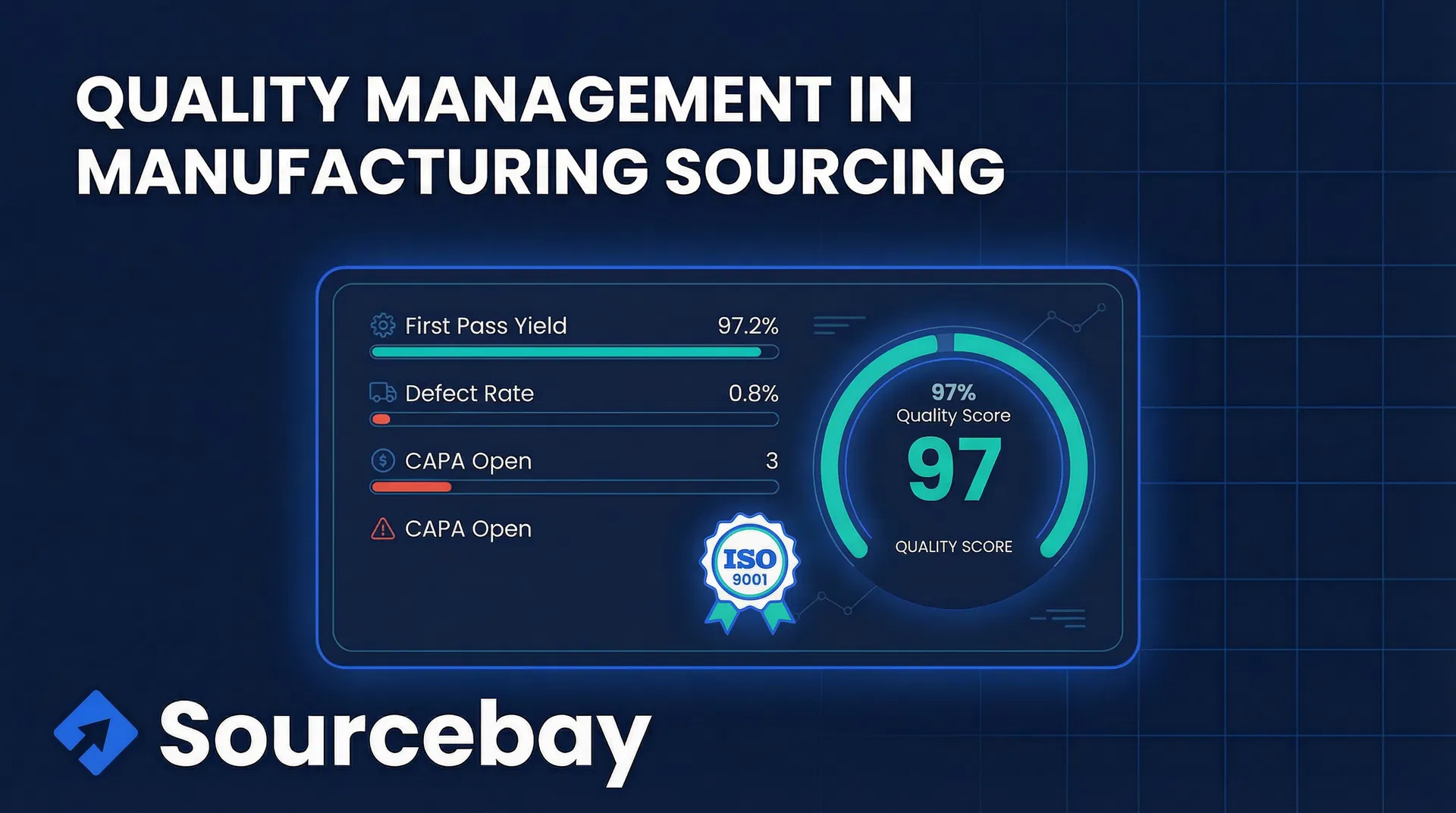
Key performance indicators (KPIs) quantify supplier quality performance objectively. Defect rates measured in parts per million (PPM) enable comparison across suppliers and tracking improvement over time. First pass yield metrics indicate process stability. On-time delivery performance affects production scheduling and inventory costs. Tracking these metrics creates accountability and identifies improvement priorities.
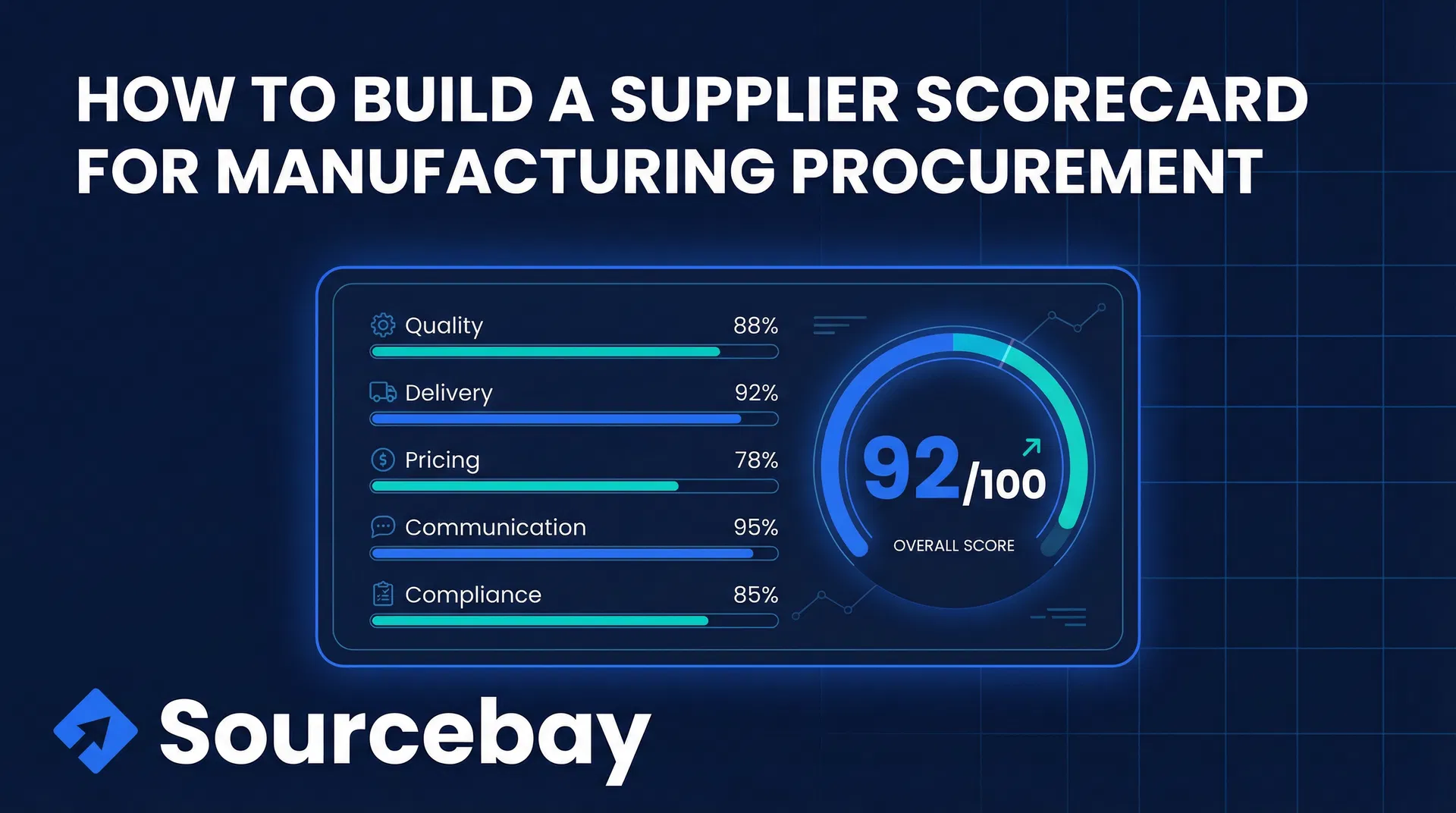
Supplier scorecards consolidate multiple performance dimensions into comprehensive evaluations. Weighting quality, delivery, cost, and responsiveness based on business priorities generates overall supplier ratings. Regular scorecard reviews with suppliers communicate expectations, recognize strong performance, and address deficiencies. Transparent performance measurement strengthens supplier relationships and drives improvement.
Trend analysis identifies emerging quality issues before they escalate. Plotting defect rates, customer complaints, or corrective action requests over time reveals deteriorating performance requiring intervention. Statistical process control charts detect process shifts or increased variation signaling loss of control. Early detection enables proactive problem-solving rather than reactive crisis management.
Root Cause Analysis and Corrective Action
Structured problem-solving methodologies prevent recurrence of quality issues. The 8D (Eight Disciplines) process provides systematic framework for containment, root cause identification, corrective action implementation, and verification. 5-Why analysis drills down through symptom layers to identify fundamental causes. Fishbone diagrams organize potential causes into categories for comprehensive investigation.
Effective corrective actions address root causes rather than symptoms. Implementing additional inspection catches defects but does not prevent their creation. Process improvements, training enhancements, or equipment upgrades that eliminate defect sources provide sustainable solutions. Verifying corrective action effectiveness through follow-up data collection ensures problems stay solved.
Preventive action extends beyond reactive problem-solving to proactive risk mitigation. Failure mode and effects analysis (FMEA) systematically identifies potential failure modes, assesses their severity and likelihood, and prioritizes prevention efforts. Implementing preventive actions before problems occur avoids costly quality incidents and production disruptions.
Quality Agreements and Specifications
Comprehensive quality agreements establish clear expectations and responsibilities. Defining acceptable quality levels, inspection requirements, nonconformance handling procedures, and documentation expectations prevents misunderstandings. Well-crafted quality agreements serve as reference documents during disputes and provide framework for continuous improvement discussions.
Control plans document inspection and testing requirements for each manufacturing operation. Identifying critical characteristics, measurement methods, sampling frequencies, and reaction plans creates shared understanding of quality requirements. Control plans evolve as processes improve and risks change, maintaining relevance throughout product lifecycles.
Specification clarity prevents interpretation differences causing quality disputes. Ambiguous tolerances, undefined surface finish requirements, or missing material specifications force suppliers to make assumptions potentially misaligned with customer expectations. Investing time in complete, unambiguous specifications prevents costly quality issues and relationship strain.
Advanced Quality Planning
Production part approval processes (PPAP) validate supplier readiness before full production. PPAP submissions include dimensional inspection reports, material certifications, process flow diagrams, control plans, and sample parts. Reviewing these elements confirms supplier understanding of requirements and capability to meet them consistently. PPAP approval gates prevent premature production launches that generate quality problems.
First article inspection (FAI) verifies initial production meets all specifications. Comprehensive dimensional inspection, material testing, and functional validation identify issues before volume production begins. Thorough FAI prevents costly production of defective parts and establishes baseline for ongoing production verification.
Process failure mode and effects analysis (PFMEA) identifies potential quality risks during manufacturing. Systematically analyzing each process step reveals failure modes, their potential effects, and current controls. Risk priority numbers guide improvement efforts toward highest-impact opportunities. PFMEA transforms from one-time exercise to living document updated as processes and products evolve.
Measurement System Analysis
Gage repeatability and reproducibility (GR&R) studies validate measurement system capability. Measurement variation must be significantly smaller than specification tolerance to effectively detect defects. GR&R studies quantify measurement system variation and compare it to total variation and tolerance. Systems with GR&R below 10% of tolerance provide excellent discrimination. Values exceeding 30% indicate inadequate measurement systems requiring improvement.
Calibration programs ensure measurement accuracy over time. Regular calibration against traceable standards maintains measurement system integrity. Calibration intervals balance accuracy requirements against calibration costs. Critical measurements may require monthly calibration while less critical features accept annual intervals. Documented calibration records demonstrate measurement system control and support quality certifications.
Measurement uncertainty quantification acknowledges that all measurements contain error. Understanding measurement uncertainty enables appropriate tolerance setting and prevents false acceptance or rejection of parts. Accounting for measurement uncertainty in acceptance decisions improves quality outcomes and reduces customer-supplier disputes over borderline measurements.
Continuous Improvement Culture
Kaizen events focus cross-functional teams on rapid improvement of specific processes. Intensive multi-day workshops analyze current state, identify waste and variation sources, and implement improvements. Kaizen events generate quick wins that build momentum for broader continuous improvement initiatives. Regular kaizen activities embed improvement into organizational culture.
Lean manufacturing principles eliminate waste and variation that compromise quality. Value stream mapping identifies non-value-adding activities for elimination. 5S workplace organization improves efficiency and reduces errors. Poka-yoke (error-proofing) devices prevent defects through design rather than inspection. Applying lean principles systematically improves quality while reducing costs.
Six Sigma methodologies reduce process variation through data-driven improvement. DMAIC (Define, Measure, Analyze, Improve, Control) framework structures improvement projects. Statistical analysis tools identify variation sources and quantify improvement opportunities. Six Sigma training develops organizational capability for sustained quality improvement.
Supplier Development Programs
Collaborative improvement initiatives strengthen supplier capabilities and relationships. Joint problem-solving teams combining customer and supplier expertise tackle quality challenges more effectively than either party alone. Sharing best practices and improvement methodologies builds supplier capabilities benefiting all customers. Investment in supplier development generates returns through improved quality, reduced costs, and enhanced innovation.
Training and technical assistance accelerate supplier improvement. Providing statistical process control training, measurement system analysis expertise, or problem-solving methodologies builds supplier capabilities. Technical assistance with process optimization, quality system implementation, or equipment selection demonstrates commitment to mutual success. Suppliers receiving development support often reciprocate with better service and preferential treatment.
Recognition programs motivate supplier excellence. Supplier awards, preferred supplier status, and public acknowledgment of outstanding performance reinforce desired behaviors. Recognition costs little but generates significant goodwill and competitive motivation among suppliers. Formal recognition programs complement performance measurement systems by celebrating success rather than only addressing problems.
About the Author: The SourceBay team brings extensive quality engineering and supply chain management experience across regulated industries including aerospace, medical devices, and automotive manufacturing, helping companies build robust quality systems that prevent defects and drive continuous improvement.
Manufacturing Procurement Specialists
The Sourcebay Editorial Team comprises seasoned professionals with 15+ years of combined experience in B2B manufacturing procurement, supply chain management, and industrial sourcing across automotive, aerospace, electronics, and precision engineering sectors. Our team has helped hundreds of procurement managers streamline RFQ workflows, qualify suppliers, and reduce sourcing cycle times. We write to share practical, field-tested insights for engineering and procurement professionals.