Recent global events have exposed critical vulnerabilities in manufacturing supply chains, forcing companies to rethink traditional sourcing strategies. Supply chain disruptions cost businesses billions annually through production delays, expedited shipping, and lost sales opportunities. Building resilient supply chains requires proactive risk identification, strategic supplier diversification, and robust contingency planning.
Identifying Supply Chain Vulnerabilities
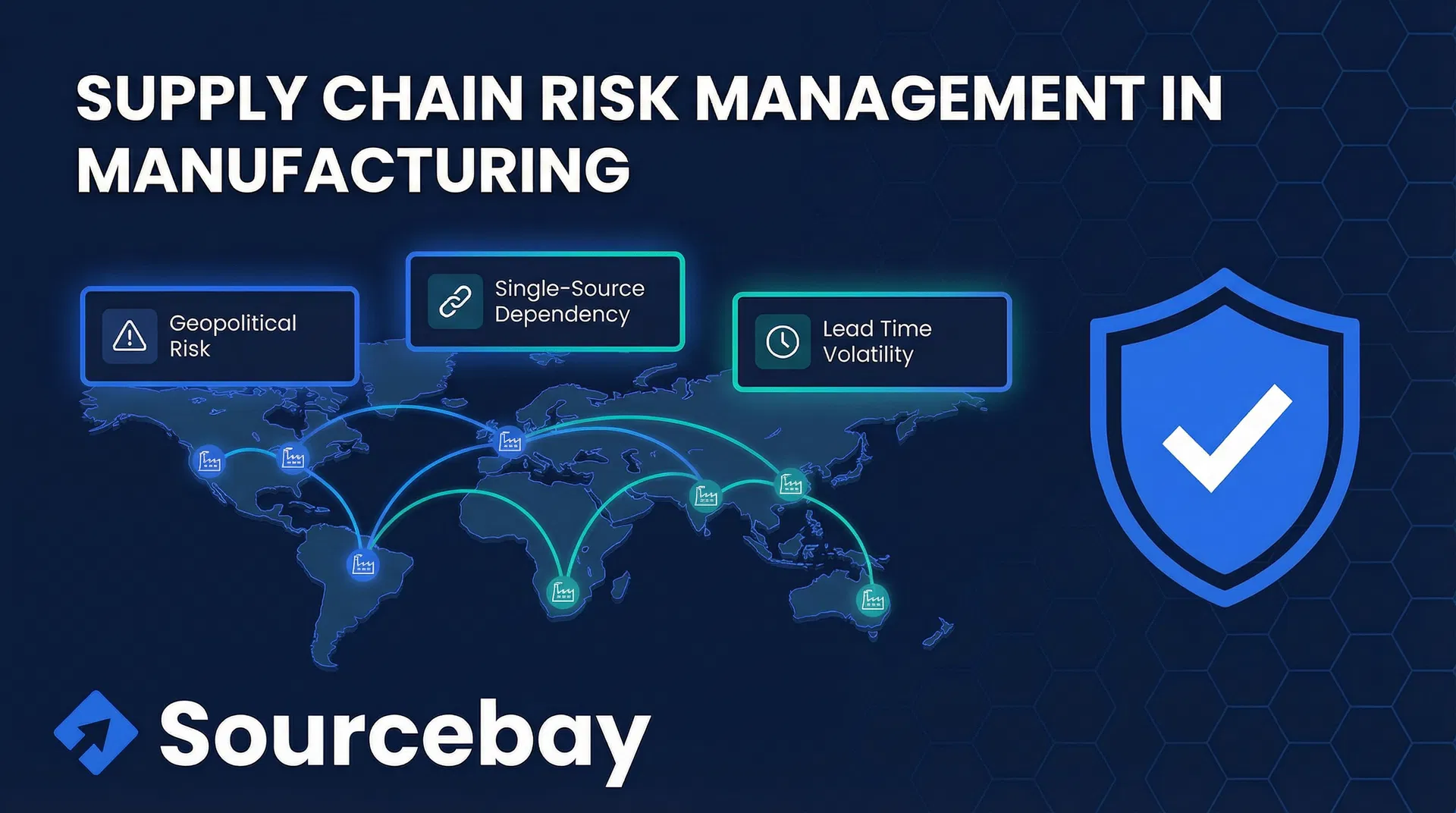
Comprehensive risk assessment forms the foundation of effective supply chain management. Single-source dependencies represent one of the most significant vulnerabilities in manufacturing supply chains. When critical components rely on a single supplier, any disruption at that facility immediately threatens production continuity. Mapping your entire supply chain, including second and third-tier suppliers, reveals hidden single points of failure.
Geographic concentration creates another common vulnerability. Sourcing multiple components from suppliers located in the same region exposes operations to localized disruptions like natural disasters, political instability, or regional infrastructure failures. The 2011 Thailand floods demonstrated this risk dramatically, disrupting global hard drive production despite companies maintaining multiple suppliers in the affected region.
Financial stability of suppliers warrants ongoing monitoring. Supplier bankruptcies can halt production abruptly, leaving companies scrambling for alternative sources. Regular financial health assessments, including credit ratings and financial statement analysis, help identify at-risk suppliers before disruptions occur. Early warning signs enable proactive supplier transitions rather than reactive crisis management.
Strategic Supplier Diversification
Dual-sourcing strategies balance risk mitigation with operational efficiency. Maintaining qualified alternate suppliers for critical components ensures production continuity if primary suppliers experience disruptions. However, dual-sourcing requires careful management to maintain adequate volume with each supplier, preserving their commitment and competitive pricing.
Geographic diversification spreads risk across different regions and regulatory environments. Combining suppliers from multiple countries or continents reduces exposure to localized disruptions. This approach proved invaluable during recent trade tensions and pandemic-related lockdowns, as companies with geographically diverse supply bases maintained better production continuity than those concentrated in single regions.
Supplier tiering creates structured backup options without excessive complexity. Primary suppliers handle the majority of volume, secondary suppliers maintain qualification and periodic orders to preserve relationships, and tertiary suppliers remain identified and documented for emergency activation. This tiered approach balances cost efficiency with risk mitigation.
Building Supplier Relationships for Resilience
Transparent communication strengthens supply chain resilience. Sharing production forecasts, new product development plans, and potential challenges enables suppliers to plan capacity and allocate resources effectively. Suppliers with advance visibility into customer requirements demonstrate better responsiveness during disruptions and capacity constraints.
Collaborative planning and forecasting (CPFP) processes formalize information sharing between customers and suppliers. Regular planning meetings, shared demand forecasts, and joint capacity planning improve alignment and reduce surprises. This collaboration proves especially valuable for components with long lead times or complex manufacturing processes.
Performance-based relationships incentivize supplier investment in resilience. Recognizing and rewarding suppliers who demonstrate strong quality, delivery performance, and responsiveness encourages continued excellence. Preferred supplier programs, volume commitments, and long-term agreements provide suppliers with business stability, motivating investments in capacity, quality, and redundancy.
Inventory Strategy and Buffer Stock
Strategic inventory positioning balances working capital efficiency with supply chain resilience. Safety stock calculations traditionally focus on demand variability, but resilient supply chains also account for supply variability and potential disruptions. Components with long lead times, single-source dependencies, or high criticality warrant higher safety stock levels.
Consignment inventory arrangements shift inventory holding costs to suppliers while maintaining physical stock proximity. Suppliers own inventory stored at customer facilities or nearby warehouses, transferring ownership only upon consumption. This approach reduces customer working capital requirements while ensuring immediate component availability.
Vendor-managed inventory (VMI) programs delegate inventory management responsibility to suppliers. Suppliers monitor customer consumption and automatically replenish stock to agreed levels. VMI reduces administrative burden, improves inventory turns, and leverages supplier expertise in demand forecasting and inventory optimization.
Technology-Enabled Risk Management
Supply chain visibility platforms provide real-time insights into supplier performance and potential disruptions. Cloud-based systems aggregate data from multiple sources, including supplier production schedules, shipping tracking, and external risk intelligence. Automated alerts notify procurement teams of potential issues before they impact production.
Predictive analytics identify emerging risks by analyzing historical patterns and external data sources. Machine learning algorithms detect anomalies in supplier delivery performance, quality metrics, or financial indicators that may signal future problems. Early warning enables proactive intervention rather than reactive crisis management.
Digital twin technology simulates supply chain scenarios to evaluate resilience. Virtual models of supply networks enable testing various disruption scenarios, identifying vulnerabilities, and evaluating mitigation strategies without real-world consequences. This simulation capability supports data-driven decision-making for supply chain design and risk management investments.
Regulatory Compliance and Trade Considerations
Evolving trade regulations create ongoing supply chain challenges. Tariffs, import restrictions, and changing trade agreements can suddenly impact component costs and availability. Maintaining awareness of regulatory developments and evaluating alternative sourcing options provides flexibility to adapt quickly when trade policies change.
Customs compliance and documentation requirements vary significantly across countries. Errors in classification, valuation, or documentation can result in shipment delays, penalties, and increased costs. Investing in customs expertise, either in-house or through specialized service providers, minimizes these risks and ensures smooth cross-border flows.
Country-of-origin requirements affect supplier selection for companies serving government or defense markets. Buy American Act provisions, Trade Agreements Act compliance, and other origin-based requirements constrain sourcing options. Understanding these requirements early in product development prevents costly redesigns or supplier changes later.
Crisis Response and Business Continuity Planning
Documented contingency plans enable rapid response when disruptions occur. Pre-approved alternate suppliers, emergency procurement authorities, and escalation procedures reduce decision-making delays during crises. Regular plan reviews and updates ensure procedures remain current and effective.
Cross-functional crisis response teams coordinate activities across procurement, operations, engineering, and quality functions. Clearly defined roles, communication protocols, and decision-making authority prevent confusion and delays during high-pressure situations. Regular simulation exercises test team readiness and identify improvement opportunities.
Post-disruption analysis captures lessons learned and drives continuous improvement. Conducting thorough reviews after supply chain disruptions identifies root causes, evaluates response effectiveness, and generates improvement actions. Documenting these insights builds organizational knowledge and strengthens future resilience.
Measuring Supply Chain Resilience
Key performance indicators (KPIs) quantify supply chain resilience and track improvement over time. Supplier diversification metrics measure the percentage of spend concentrated with top suppliers or in specific regions. Supply chain mapping completeness tracks visibility into multi-tier supplier networks. Disruption recovery time measures how quickly operations return to normal after supply chain events.
Scenario stress testing evaluates supply chain robustness under various disruption conditions. Simulating supplier failures, transportation disruptions, or demand spikes reveals vulnerabilities and validates mitigation strategies. Regular stress testing, similar to financial institutions' practices, ensures supply chains maintain resilience as business conditions evolve.
Continuous improvement processes embed resilience into supply chain culture. Regular reviews of supplier performance, risk assessments, and mitigation effectiveness drive ongoing enhancements. Benchmarking against industry best practices identifies opportunities to strengthen resilience capabilities.
About the Author: The SourceBay team brings extensive experience in global supply chain management, risk mitigation, and manufacturing operations across diverse industries including aerospace, automotive, and industrial equipment.
Manufacturing Procurement Specialists
The Sourcebay Editorial Team comprises seasoned professionals with 15+ years of combined experience in B2B manufacturing procurement, supply chain management, and industrial sourcing across automotive, aerospace, electronics, and precision engineering sectors. Our team has helped hundreds of procurement managers streamline RFQ workflows, qualify suppliers, and reduce sourcing cycle times. We write to share practical, field-tested insights for engineering and procurement professionals.